Toilets on Mount Kilimanjaro – What to Expect
Climbing Mount Kilimanjaro is an incredible adventure, but understanding the toilet facilities before you go will help you prepare mentally and physically for the journey. Below is a detailed breakdown of what to expect.
Public Toilets on Mount Kilimanjaro
Public toilets are available at every official campsite along the mountain’s trekking routes. These are government-maintained pit latrines built inside small wooden or metal structures.
They are very basic: usually a hole in the ground with limited ventilation and no running water. Cleanliness depends heavily on how busy the mountain is. During peak season, they may become less hygienic due to the high number of climbers using them daily.
There is no toilet paper, soap, or water provided, so climbers must carry their own personal hygiene supplies. While not luxurious, these facilities are functional and serve their purpose during the climb.
Private Portable Toilets (Comfort Upgrade)
Many professional trekking companies offer private portable toilets as an optional upgrade. This option significantly improves comfort and hygiene during the climb.
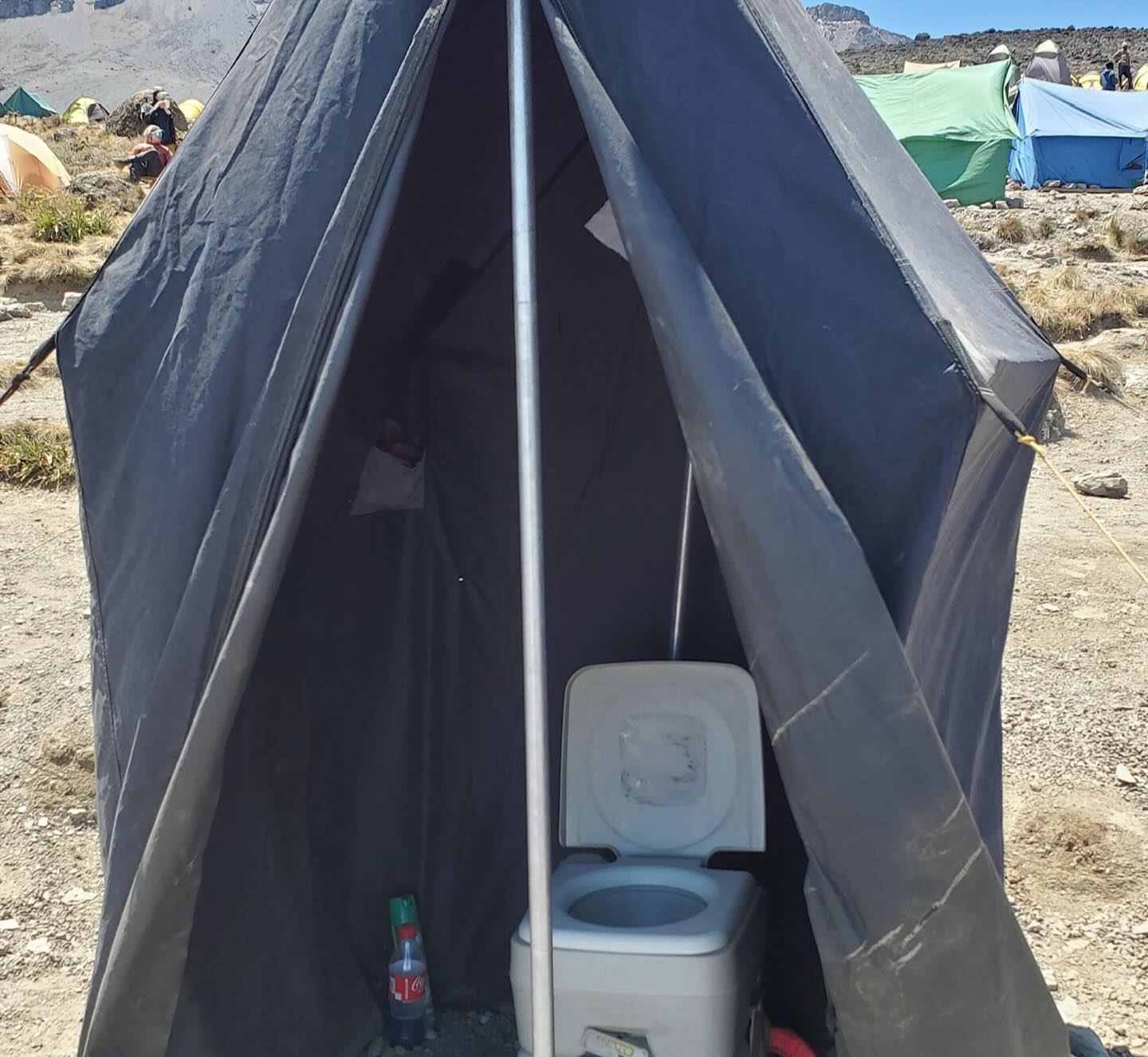
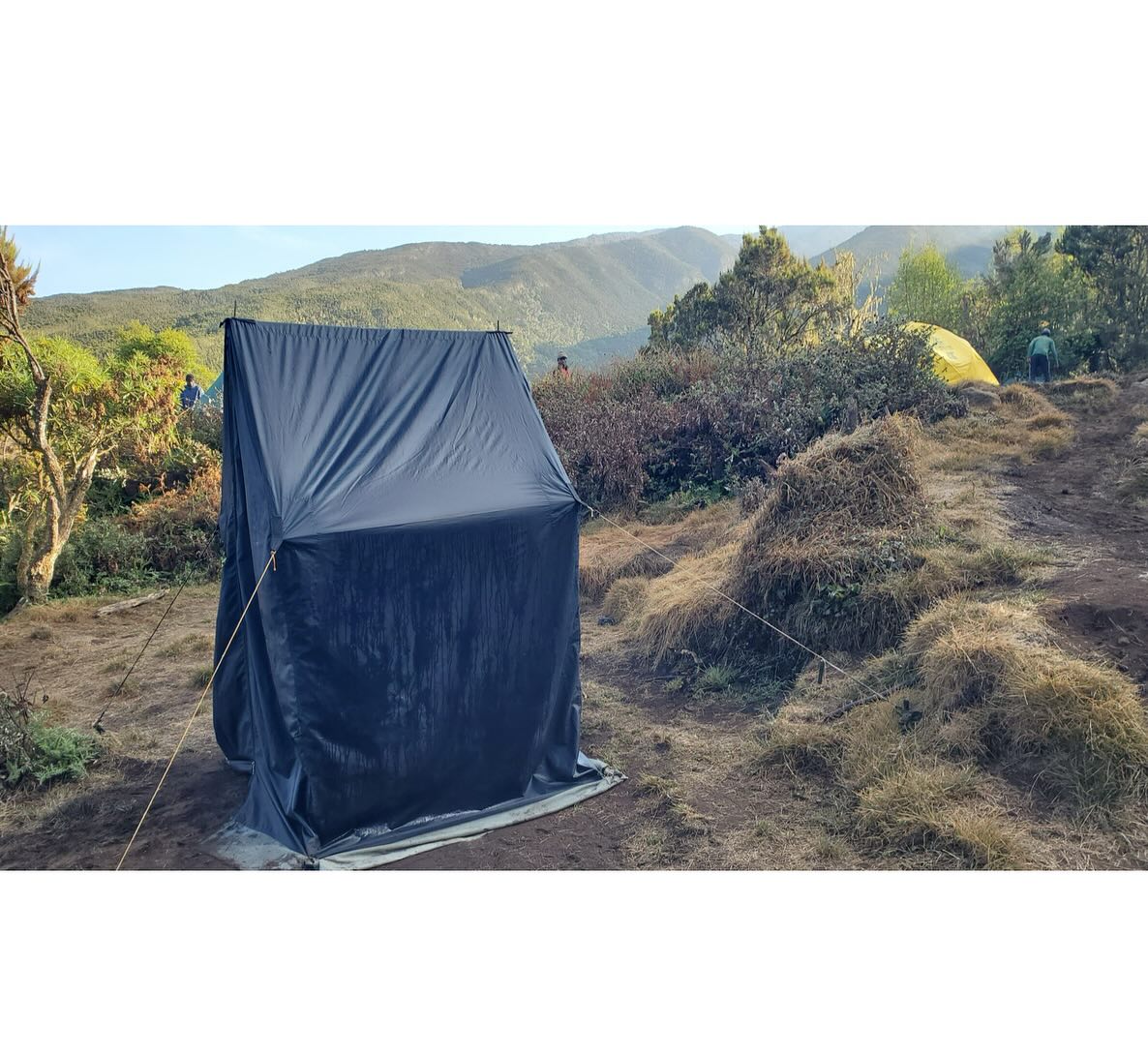
A private toilet comes with a portable flushing system and is placed inside a personal toilet tent exclusively for your group. The trekking crew sets it up at every camp and cleans it regularly.
For climbers who value privacy and cleanliness, especially on longer routes, this option makes a big difference and helps maintain morale throughout the trek.
Toilet Facilities by Route
The type of public toilet facilities is generally similar across all popular routes on Kilimanjaro, including:
- Machame Route – A popular camping route with public pit latrines at each campsite.
- Lemosho Route – Known for beautiful scenery; toilet facilities are basic campsite latrines.
- Northern Circuit Route – The longest route, using similar public pit toilets at camps.
- Marangu Route – The only route with hut accommodation, but toilets are still shared and basic.
While the routes differ in scenery, duration, and difficulty, toilet standards remain fairly consistent except for accommodation differences on Marangu.
Special Note About the Marangu Route
The Marangu Route is unique because climbers sleep in wooden huts instead of tents. The huts are shared dormitory-style accommodations.
However, even though the sleeping arrangement differs, the toilets are still shared public facilities located near the huts. They are slightly more structured than some campsite latrines but remain simple and communal.
This means climbers should not expect hotel-style bathrooms, even on the hut route.
Hygiene and Preparation Tips
Proper preparation makes the experience much easier. Climbers are advised to bring toilet paper, wet wipes, hand sanitizer, and a small headlamp for nighttime visits.
It is also important to maintain good hydration throughout the trek. Some climbers reduce water intake to avoid using the toilet frequently, but this is not recommended, as hydration is essential for acclimatization and preventing altitude sickness.
Being mentally prepared for basic conditions helps you focus on the real goal reaching the summit.
Final Thoughts
Toilet facilities on Mount Kilimanjaro are simple and functional, reflecting the remote mountain environment. While public toilets are basic, they are available at every campsite. For those seeking added comfort, private portable toilets offer a cleaner and more convenient alternative.
With the right expectations and preparation, toilet facilities will not interfere with your Kilimanjaro adventure they simply become part of the authentic mountain experience.